
Obituaries Archive
Obituaries » Sue Ann Hopper
Check your settings when you are happy with your print preview press the print icon below.
Show Obituaries Show Guestbook Show Photos QR Code Print
Print
Share your Memorial with Family & Friends
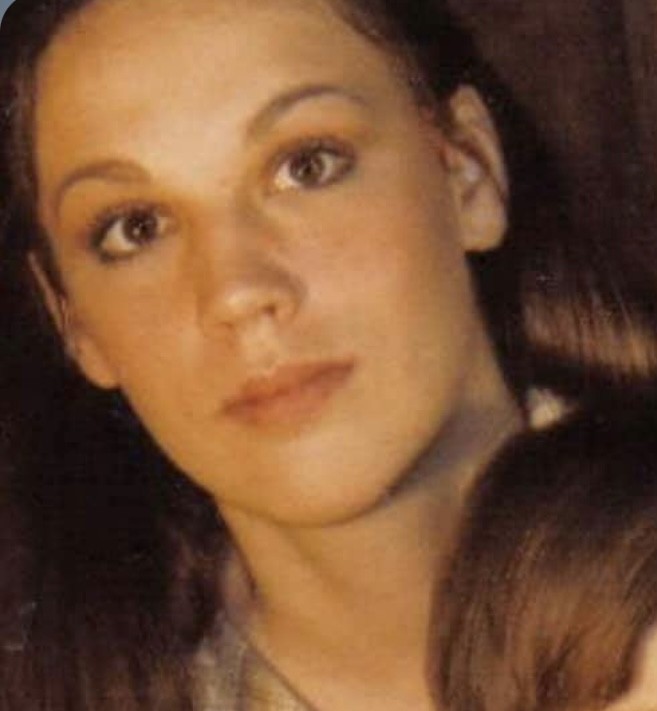
Sue Ann was born in Kalamazoo, Michigan, on April 11, 1958, to Marilyn and Henry Borkowski the fourth child of six, and passed away unpeacefully after a long hard fight at Bronson Hospital on April 7, 2026.
Sue Ann, at her core, before a system, its inhabitants, and the medical establishment would eventually shape and name her, was someone who grew things, someone who made things. She loved plants and gardening. She had an artist’s eye, the kind was born without training and makes one wonder what might have been possible if she had ever had the foresight, support, and space to follow it. She had a sense of humor that stayed with her despite and through everything. She was funny in hospital rooms and in bad apartments and in the middle of a lot of things that were not funny at all. She told stories about the people in her life – all of them, even the ones who had hurt her – with the full-eyed love of someone who saw people clearly and chose to hold them tenderly, anyway, or as a result. She was by no means perfect in this, as a broken person can’t always be. Even in that, though, it was no small capacity. In another life, in another circumstance, it would have been recognized for the rare thing that it was.
She loved dogs with her whole self and babies the same way, carrying an immediate, uncomplicated recognition of something worth protecting. She loved the four people she brought into the world deeply, in the ways she could at any given time and knew how.
When her body and mind allowed it, she worked as a CNA caring for the elderly, helping them as they made their ways out of this life, and would later perform similar acts of care when she could for elderly neighbors. She understood without needing it explained that a person at the end of their life deserves someone who will stay in the room, hold the stillness with them, not look away. She did that for strangers, quietly and without ceremony, as though it were simply what you do. She often said if money were not a thing, she would do that, and felt it was her calling. By all accounts, she was good at it. She offered a kind of presence and dignity that she herself would later be, in many respects, denied.
Her story is a story about what happens to a person – a girl, first – when the adults and institutions around her are not equal to what she needs. When a well-intended family unit is held together by appearances. When an institution is a source of shame as much as salvation. When an era and culture does not have the language for what a sensitive, artistic, unruly girl is going through, and so does not try to find it. When a society sees the human experience as monolithic rather than the endlessly varied mystery it is. Something went unseen, unheard, misunderstood in her very early. And the trajectory of a life, it turns out, can pivot on exactly that.
What followed was a life that moved steadily away from the stability she had been born into, and steadily toward the margins, not so much because she was without intelligence or will, but because the systems existing around people in circumstantial freefall are not, in this country, designed for everyone.
And each time Sue Ann was judged, each time someone saw the outcome of her life without asking what produced it, each time said judgment contributed to said production, each time a door closed because she no longer looked like someone a door should open for, the distance grew. This is how a country loses people it did not have to lose, less in one dramatic moment and more in the accumulation of small decisions made by people who believed they were simply following the rules, who don’t question their complicity or why they, too, operate the way they operate.
She became ill in the way that people become ill when care has been deferred for too long and stress has been sustained for too many years. Stage IV non-Hodgkin’s lymphoma. Pulmonary fibrosis. Kidney disease. Rheumatoid arthritis. There is also the matter of what pharmaceutical systems do to bodies across decades — the drugs that manage one condition while quietly producing another, the industry that is, underneath everything, a business operating inside a country that is, underneath everything, also a business. Her body became a place where several forms of institutional indifference compounded. That is a medical fact that is also a moral one.
The people who moved through her life and caused harm were not, for the most part, villains in any conscious sense at all. They were only people guided by incentives they did not examine, by hierarchies they did not question, by social scripts that told them certain lives require less care, certain suffering is less urgent, certain dignity is optional, often at the price point they are working with. This is how a system perpetuates itself without anyone needing to be deliberately cruel. It only requires people not to look up. Not to ask why. To follow the code and go home.
Underneath the surface, underneath the chaos and many difficulties, she meant well, was a lovely person, and could say a lot more for herself than many. She housed people when they needed it. She made room when there was no room. She gave generously when she had it. In the moments when she wasn’t in survival mode, she was among the kindest, extending care and whatever she had as if it were something natural, something obvious, something anyone would do. And toward the end, she grew soft.
There will be people who remember her incompletely. Who judged her in fragments, who saw the outcomes of her life without asking what produced them. That, too, is part of the story, not just of who she was, but of the social world that formed around her. A world fluent in the language of responsibility and illiterate in the language of circumstance. A world that has perfected the habit of looking at where a person ended up and calling it a choice, as though the architecture of a life is built entirely from the inside. As though some people are not handed blueprints drawn by others long before they arrive.
She was not a problem to be solved. She was a person moving through conditions that would have diminished almost anyone, and who, somehow, improbably, retained the capacity to make you laugh, to tell you a story about someone she loved, to exude adoration for all babies, to kneel and let any dog find her eager hands.
She is predeceased by her son, who also died without a service, without memorial, and who deserved better than what this country offered him, too.
She is survived by Jackie, a daughter. There is no service.
If this obituary does anything, let it refuse the lie that a life can be separated from the structures and circumstances that shaped it. Let it refuse the comfort of believing that people simply end up where they are by their own design. Let it ask, torn from our roots of tribes and community, what we owe each other and what it means when that debt goes unpaid at scale, generation after generation, in the wealthiest country in the history of the world.
Sue didn’t even begin at the bottom. She arrived there through a series of hits and failures that were not entirely her own – of family, of faith, of medicine as a business, of policy, and of a culture that has never learned to truly look at the people it is losing, a culture that prefers the story of personal failing because personal failing requires nothing of the rest of us.
She grew things. She told people’s story with such love. She made people laugh. She sat with the dying so they wouldn’t be alone.
She was here. And the world was smaller for not knowing what to do with her.
